
Community is essential as a landscape photographer. It is important to connect and stay connected with other photographers to share strategies, experiences, and tools for success. Recently, I watched a short video of a photographer walking and talking about how he had been out shooting since 8AM and by noontime he had not gotten one acceptable photo. Interestingly, he received nearly 200 or so “likes” within a few minutes of posting.
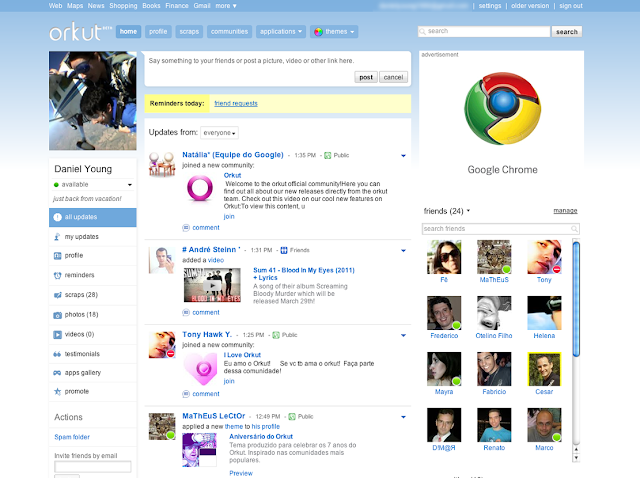
Before there was a Facebook with a host of followers there was Orkut whose purpose was to help users locate communities through keyword searches using titles, descriptions, and items on other users’ pages. By taking a look at the life of Orkut, it becomes important for understanding how to plan for longevity. By doing so we learn a great deal about what is important to remember about how to create long lasting options for communities and services for their specific and possibly underserved communities.

THE FIRST…
First popular with tech workers and students Orkut helped people connect through it’s “high prestige factor” with its membership as an invite-only feature. (Mahoney & Tang, 2024) It was socially well-connected as well as simple and easy to use. Very practically it was connected to Google and put privacy before other features. Its popularity grew because users were also able to recommend products and services. (Mahoney & Tang, 2024) There were a few ways that members could join communities through a system of rating and other small competitions. At its peak Orkut had risen to 1,500,000 communities from 5,000 in one year.
THE LAST…
Even though Orkut was a major player in Brazilian markets for digital and social media, it did not last. While other forms of advertising such as outdoor promotions were banned, users had learned to “…trust recommendations from online contacts more than other sources.” (Mahoney & Tang, 2024) For success in Brazil, especially at the time, users looked for blogging in social gaming and marketing campaigns that utilized video. However, Orkut began having trouble with keeping up with all of the advancements needed to compete and began to have functionality issues that led to blockages and other infrastructure Issues. Their demise happened because they were unable to meet the needs of their audiences and the culture of the time as well as the platform.
LESSONS
Through Orkut’s growth and demise it became clear how social media required sites to constantly innovate and keep up with what members needed. They learned that, “The actions and creations of social media consumers are a function of technology and culture.” (Mahoney & Tang, 2024) By the time Orkut learned that they had to do more to keep up with newer and more improved platforms they were unable to compete. They lost members because they were unable to figure out what customers wanted culturally as well as how to meet the needs of the growing “cross-platform” of realities created by social media. (Mahoney & Tang, 2024)
As practitioners of creating a culture of photographers we must constantly be aware of the changes happening outside of the technology of photo acquisition. We must focus also on how organizations are meeting the needs of a fast moving and innovating society as well as just growing numbers of people using the site. In order to create a strong community that will encourage marketing efforts we must seek forward thinking and looking opportunities. We must look for platforms that seek to continuously encourage technological growth, the changing needs of the community, and to provide information and opportunities that are up to date and expandable in the future.
Mahoney, L. M., & Tang, T. (2024). Strategic social media: From marketing to social change. Wiley-Blackwell
 photowanderist.org
Leave a comment